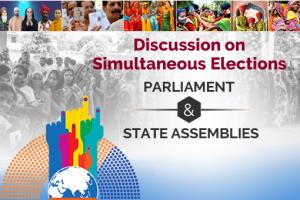
The desirability of holding simultaneous elections for the Lok Sabha and Vidhan Sabhas has been discussed at various levels. A considered view is that simultaneous elections will ...
The desirability of holding simultaneous elections for the Lok Sabha and Vidhan Sabhas has been discussed at various levels. A considered view is that simultaneous elections will not only keep alive the enthusiasm of voters, but will also result in huge savings to the public exchequer as well as avoiding repetition of administrative effort. It is also expected to control the expenses of political parties. Simultaneous elections will also avoid repeated enforcement of the Model Code of Conduct which affects administrative actions by the government.
President of India, His Excellency Shri Pranab Mukherjee has also expressed his views on the desirability of holding simultaneous elections. Speaking at a recent function, The President said that “With some election or the other throughout the year, normal activities of the government come to a standstill because of code of conduct. This is an idea the political leadership should think of. If political parties collectively think, we can change it.... The Election Commission can also put in their idea and efforts on holding the polls together and that will be highly beneficial”
Hon'ble Prime Minister Shri Narendra Modi has spoken several times on considering the feasibility of holding simultaneous Lok Sabha and state assembly elections. In two recent TV discussions, the Prime Minister reiterated this idea and invited a national debate on the issue.
Debate on the Issue - A Brief History
In India, simultaneous elections to the Lok Sabha (House of The People) and Vidhan Sabhas (State Legislative Assemblies) were organized in the years 1951-52, 1957, 1962 and 1967. Thereafter, however, the schedule could not be maintained and the elections to the Lok Sabha and the Vidhan Sabhas have still not been realigned.
The next General Election to the Lok Sabha is scheduled for 2019. Elections for the Vidhan Sabhas of 5 States are scheduled for 2017, for 13 States in 2018, for 9 States in 2019, for 1 State 2020 and the remaining are scheduled for 2021.
The issue of simultaneous elections was debated by the Law Commission in its 107thReport in 1999 (Reform of Electoral Laws) , where in it was mentioned that – “The rule ought to be one election once in five years for Lok Sabha and all Legislative Assemblies” ( Para 7.2.1.1 of the Report). Recently, Parliamentary Standing Committee on Personnel, Public Grievances, Law and Justice presented its 79th Report on ‘Feasibility of holding Simultaneous Elections to the House of People (Lok Sabha) and State Legislative Assemblies’ on 17th December 2015.
Several structural changes will need to be done in case a decision is made to conduct simultaneous election, including possibility of Constitutional amendments to Articles 83, 172, 85 and 174 to streamline the process.
Seventy Ninth Report Parliamentary Standing Committee for PERSONNEL, PUBLIC GRIEVANCES, LAW AND JUSTICEMyGov Discussion
MyGov invites citizens, Parliamentarians, Members of Legislative assemblies and councils, constitutional experts, academics experts, bureaucrats, social media influencers, Think Tanks and all other interested people to give their considered view on the subject. The issues that can be considered while formulating a view are (only an indicative list and not exhaustive):
1. Is it desirable to hold simultaneous elections? What are the pros and cons?
2. If simultaneous elections are held, then for the first time what happens to assemblies whose scheduled tenure either ends before or after the proposed date of holding elections?
3. Should the term of Lok Sabha and assemblies be fixed?
4. What would happen in case by-elections are necessitated in between terms?
5. What happens in case the ruling party or coalition loses majority in between term, either in Lok Sabha or in State assemblies?
You may submit your opinion by either writing in the comment box below, or by attaching a PDF document, or through a Youtube video.
The last for submitting your opinion is 15th October, 2016.
DEVELOPMENT OF GUJARAT GOVERMENT
BHARTIYA JANTA PARTY
AHMEDABAD: A day after Gujarat Chief Minister Vijay Rupani expressed "difficulty" in removing toll tax from August 15, the state government today exempted small passenger vehicles and state-run buses from paying the road levy on 12 state highways from Independence Day.
--- JAY JAY GARVI GUJARAT
--- JAY HIND, JAY BHARAT
Dear Prime Minister of our Nation India Modi Ji,
This is regarding some view on simultaneous election... i had expressed some views on 05th Oct 2016... would like to add some points again here , frankly...the same in pdf file...overall yours is a good governance...
Bhartiya Janta Party
the goverment of state GUJARAT
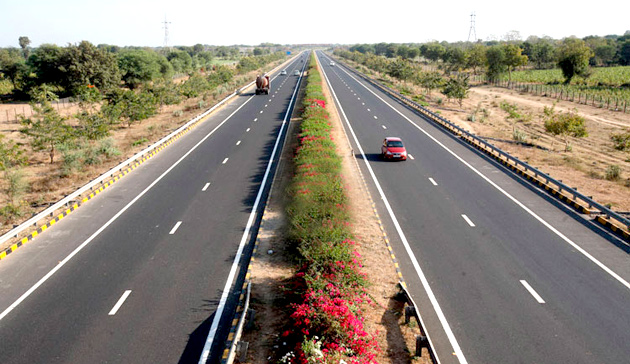
Gujarat also stands out in the percentage share of Surfaced to total roads in India, indicating that the government focuses on adding good quality roads. Its share of surfaced roads, (90.24) is much higher than Maharashtra (79.73), Punjab (82.98), Andhra Pradesh (54.87), Rajasthan (72.08) and the second highest in India.
--- JAY JAY GARVI GUJARAT
--- JAY HIND JAY BHARAT
If this all is to save time and efforts, government and Election Commission shall club two elections but not Lok sabha and Vidhan Sabha together. They can club Loak Sabha with Zilla Parishad, Vidhan Sabha with Taluka Panchyat and Nagarparishad, Mahanagarpalika with Gram Panchyat.
Instead of combining Lok-sabha with Vidhan-sabha, I would suggest combining vidhan-sabha with local body elections (Mahanagarpalika, Nagarpalika and gram panchayats). Lok-sabha and vidhan-sabha should be kept separate to maintain the federal structure intact and diverse. Otherwise, there is a high chance that same parties represent at both levels and collude to push their agenda. This will not allow any political change for next 5 years! In such case, the elections should occur every 4 years.
1. Great Idea, parties will be relaxed and they will get time to think something else other than election. The fever of one person or party at the time of election will affect the result all over India, it will either beneficial or ????.
2. the parties who haven't finished their term will resist so it will better to extend their term.
3. yes
4. we must have election in between term in case, and the winner will rule until the schedule election date. we must continue schedule
5. as above
It is a good idea. Expenditure can be reduced. If it is implemented, an MLA can not contest as MP and vice versa. Hence, by-election can be avoided. If Polling Materials can be brought in the Polling Station before 12 a.m. of the day before Polling Day. Officers may be intimated the details of Polling Station to which they are posted at 7 a.m. on the day before Polling Day. Then the Polling Party can reach the Polling Station before 1 p.m. on the day before Poll Day. Thus reduce Bus hiring.
I completely agree with simultanous election process inwhich nagion can save our money ,man and machine . Which is the key ingradiant of development. I also appreciate this innovative thought and wish to all parliamentarians to include the article in our constitution immediately.