Home | MyGov

Accessibility
ऐक्सेसिबिलिटी टूल
कलर एडजस्टमेंट
टेक्स्ट साइज़
नेविगेशन एडजस्टमेंट

Inviting Suggestions on the Draft Blue Economy Policy

Inviting Suggestions on the Draft Blue Economy Policy
आरंभ करने की तिथि :
Feb 19, 2021
अंतिम तिथि :
Feb 27, 2021
23:45 PM IST (GMT +5.30 Hrs)
प्रस्तुतियाँ समाप्त हो चुके

With a coastline of nearly 7.5 thousand kilometres, India has a unique maritime position. Nine of its 29 states are coastal, and the nation’s geography includes 1,382 islands. ...

With a coastline of nearly 7.5 thousand kilometres, India has a unique maritime position. Nine of its 29 states are coastal, and the nation’s geography includes 1,382 islands. There are nearly 199 ports, including 12 major ports that handle approximately 1,400 million tons of cargo each year. Moreover, India’s Exclusive Economic Zone of over 2 million square kilometres has a bounty of living and non-living resources with significant recoverable resources such as crude oil and natural gas. Also, the coastal economy sustains over 4 million fisherfolk and coastal communities. With these vast maritime interests, the blue economy occupies a vital potential position in India’s economic growth. It could well be the next multiplier of GDP and well-being, provided sustainability and socio-economic welfare are kept centre-stage. Therefore, India's draft blue economy policy is envisaged as a crucial framework towards unlocking country’s potential for economic growth and welfare.

The MoES prepared the draft blue economy policy framework in line with the Government of India’s Vision of New India by 2030. It highlighted the blue economy as one of the ten core dimensions for national growth. The draft policy framework emphasizes policies across several key sectors to achieve holistic growth of India’s economy. The document recognizes the following seven thematic areas.

1.National accounting framework for the blue economy and ocean governance.
2.Coastal marine spatial planning and tourism.
3.Marine fisheries, aquaculture, and fish processing.
4.Manufacturing, emerging industries, trade, technology, services, and skill development.
5.Logistics, infrastructure and shipping, including trans-shipments.
6.Coastal and deep-sea mining and offshore energy.
7.Security, strategic dimensions, and international engagement.

The Ministry of Earth Sciences (MoES) has rolled out the Draft Blue Economy policy for India by Inviting suggestions and inputs from various stakeholders including industry, NGOs, academia, and citizens. The draft blue economy policy document outlines the vision and strategy that can be adopted by the Government of India to utilize the plethora of oceanic resources available in the country.

Click here to read the Draft Blue Economy Policy.

फिर से कायम कर देना
487 सबमिशन दिखा रहा है
MMahavarshini
MMahavarshini 5 साल 4 महीने पहले
The Ministry of Earth Sciences (MoES) has rolled out the Draft Blue Economy policy for India in the public domain inviting suggestions and inputs from various stakeholders including industry, NGOs, academia, and citizens. India’s blue economy is understood as a subset of the national economy comprising an entire ocean resources system and human-made economic infrastructure in marine, maritime, and onshore coastal zones within the country’s legal jurisdiction.
LAXMI PRASAD BODA
LAXMI PRASAD BODA 5 साल 4 महीने पहले
Blue Economy emphasizes on integration of development of the ocean economy with social inclusion, environmental sustainability, combined with innovative business models. It encompasses– Renewable Energy: Sustainable marine energy can play a vital role in social and economic development. Fisheries: Sustainable fisheries can generate more revenue, more fish and help restore fish stocks. Maritime Transport: Over 80% of international goods traded are transported by sea.
L Bhaskara Rao
L Bhaskara Rao 5 साल 4 महीने पहले
Based on suitable location with resources for collecting sea shells and sea rocks ,nearest villages may be promoted for rural industry to support aquirium interior toys and models. Decorative items and ornaments. Selecting a suitable location and village will be of high importance.
ArchanaMishra
ArchanaMishra 5 साल 4 महीने पहले
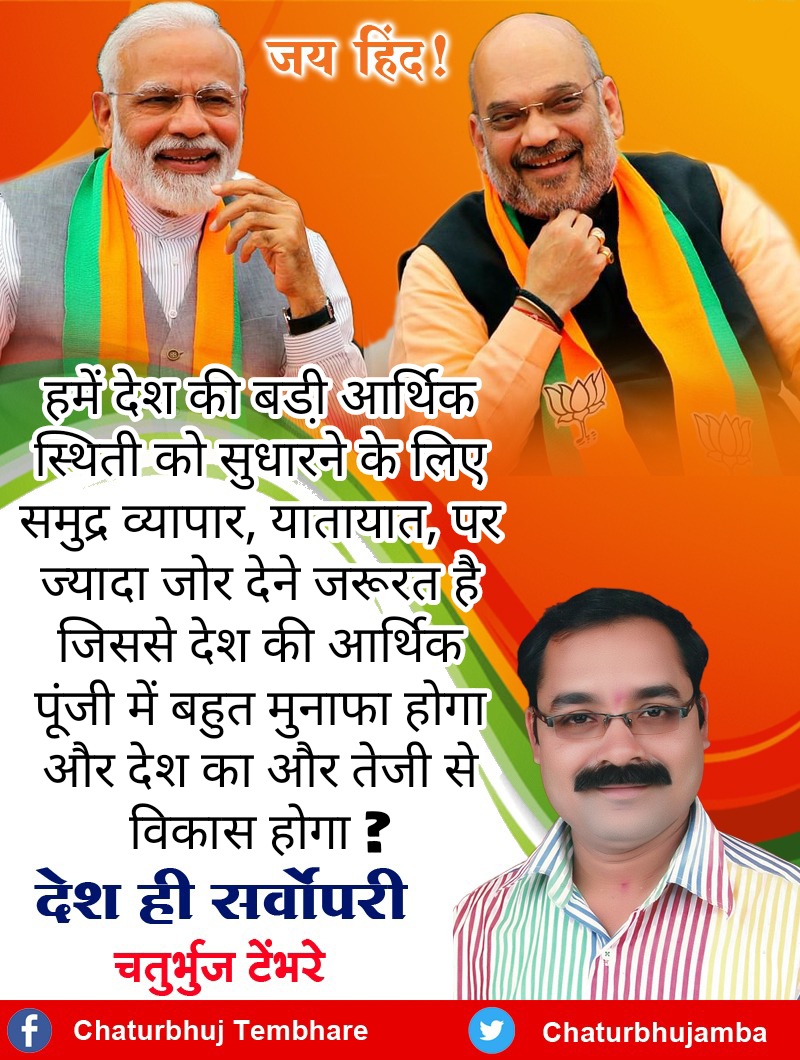
हिंद महासागर दुनिया का तीसरा सबसे बड़ा महासागर है अर्थात् हम प्राकृतिक समुद्री संपदा के भी धनी हैं जरूरत है बस इसका सही उपयोग कर देश की स्थिति को सुदृढ करने की। चौतरफा विकास ही है सही विकास।- धन्यवाद
ArchanaMishra
ArchanaMishra 5 साल 4 महीने पहले
हमें सागर को बचाने के लिए मैंग्रोव्स को बचाना होगा क्योंकि प्राथमिक उत्पादकों जैसे कि भूमि पौधों या समुद्र में रहने वाले Phytoplankton, मैंग्रोव प्रकाश संश्लेषक जीव हैं जो सूर्य के प्रकाश को ऊर्जा में बदल सकते हैं। ... खुले पानी और तटरेखा के बीच स्थित, मैंग्रोव सीप, फाइटोप्लांकटन, स्पंज, केकड़ों और अन्य जीवों सहित कई प्रजातियों के लिए आवास प्रदान करते हैं। यही नहीं यह समुद्र तट के कटाव को रोकने में मदद करते हैं जिससे तूफान के प्रभाव से अवशोषित आस-पास की आबादी वाले क्षेत्र सुरक्षित हो पायेंगे।
Sonam
Sonam 5 साल 4 महीने पहले
विश्व के कई भागों में शुद्ध पानी के संसाधन और स्रोत कम होते जा रहे हैं,जबकि जनसंख्या के दबाव की वजह से इसकी मांग बहुत तेजी से बढ़ रही है।आने वाले समय में दुनिया की आर्थिक और राजनैतिक स्थिति को स्थिर रखने में 'पानी' महत्वपूर्ण भूमिका अदा करेगा,ठीक उसी प्रकार, जिस प्रकार आज की स्थिति में पेट्रो-संसाधन करते हैं। हमें समुंद्र के पानी को साफ बनाने के लिए प्रयास करने चाहिए।पानी पर ही विभिन्न रोजगार उद्योग निर्भर करते हैं।अगर साफ पानी ही नहीं होगा तो देश आर्थिक और राजनीति दृष्टि से सुदृढ़ कैसे बनेगा।