
Home | MyGov

Accessibility
ऐक्सेसिबिलिटी टूल
कलर एडजस्टमेंट
टेक्स्ट साइज़
नेविगेशन एडजस्टमेंट

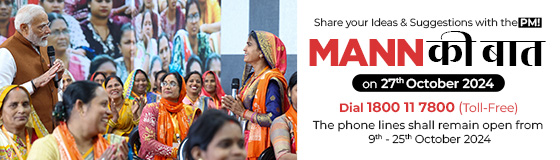
27 अक्टूबर 2024 के मन की बात कार्यक्रम के लिए प्रधानमंत्री नरेन्द्र मोदी को अपने सुझाव भेजें

27 अक्टूबर 2024 के मन की बात कार्यक्रम के लिए प्रधानमंत्री नरेन्द्र मोदी को अपने सुझाव भेजें
आरंभ करने की तिथि :
Oct 09, 2024
अंतिम तिथि :
Oct 25, 2024
23:45 PM IST (GMT +5.30 Hrs)
प्रस्तुतियाँ समाप्त हो चुके

माननीय प्रधानमंत्री नरेन्द्र मोदी उन विषयों और समस्याओं पर अपने ...

माननीय प्रधानमंत्री नरेन्द्र मोदी उन विषयों और समस्याओं पर अपने विचार शेयर करना चाहते हैं, जो आपके लिए महत्वपूर्ण हैं। प्रधानमंत्री जी आपको मन की बात के 115वें एपिसोड में संबोधित किए जाने वाले विषयों पर अपने विचार शेयर करने के लिए आमंत्रित करते हैं।

मन की बात के आने वाले एपिसोड में जिन विषयों या समस्याओं पर आप चाहते हैं कि प्रधानमंत्री जी बात करें, उनके बारे में हमें अपने सुझाव भेजें। इस खुले मंच में अपने विचार शेयर करें या आप वैकल्पिक रूप से टोल-फ्री नंबर 1800-11-7800 पर कॉल कर सकते हैं और प्रधानमंत्री जी के लिए अपने संदेश को हिंदी या अंग्रेजी किसी भी भाषा में रिकॉर्ड कर सकते हैं। रिकॉर्ड किए गए कुछ संदेश ब्रॉडकास्ट का हिस्सा बन सकते हैं।

आप 1922 पर एक मिस्ड कॉल भी दे सकते हैं और सीधे प्रधानमंत्री जी को अपने सुझाव देने के लिए SMS में मिले लिंक को फॉलो कर सकते हैं।

और 27 अक्टूबर 2024 को सुबह 11:00 पर मन की बात कार्यक्रम के लिए जुड़े रहें।

फिर से कायम कर देना
2198 सबमिशन दिखा रहा है
SUTHAHAR P
SUTHAHAR P 1 year 9 महीने पहले
Sustainable Urban Planning Zoning Regulations: Implement zoning laws that require developers to include proper drainage systems, green spaces, and permeable surfaces in their construction projects. Water-Sensitive Urban Design: Promote urban design that incorporates water-sensitive infrastructure, such as swales (shallow channels to direct stormwater), rain barrels, and bio-retention systems, to minimize water stagnation.
SUTHAHAR P
SUTHAHAR P 1 year 9 महीने पहले
Stormwater Detention Ponds Retention/Detention Ponds: Construct retention or detention ponds in areas where rainwater collects. These ponds temporarily hold stormwater, allowing it to slowly infiltrate into the ground or drain away, preventing stagnation and flooding. Use of Artificial Wetlands: Develop artificial wetlands in urban areas that can store excess rainwater, reduce water stagnation, and create natural habitats for biodiversity.
SUTHAHAR P
SUTHAHAR P 1 year 9 महीने पहले
Green Infrastructure Rain Gardens: Create rain gardens in residential or public spaces. These are shallow, vegetated depressions designed to capture and absorb rainwater, preventing stagnation. Green Roofs: Install green roofs that help absorb rainwater, reduce runoff, and improve water drainage in urban areas. Plant Trees and Vegetation: Trees and plants help absorb excess rainwater, improving soil infiltration and reducing surface runoff.
SUTHAHAR P
SUTHAHAR P 1 year 9 महीने पहले
Rainwater Harvesting Rainwater Harvesting Systems: Install rainwater harvesting systems in homes, buildings, and public places to collect and store rainwater for later use. This reduces surface water accumulation. Rooftop Rainwater Collection: Encourage the installation of rooftop water collection systems that divert rainwater into storage tanks, reducing the amount of water that reaches the ground.
SUTHAHAR P
SUTHAHAR P 1 year 9 महीने पहले
Improve Drainage Systems Regular Maintenance: Ensure that drains, gutters, and stormwater systems are regularly cleaned and free from blockages caused by debris, leaves, or silt. Upgrading Drainage Capacity: In areas prone to heavy rainfall, it’s important to design or upgrade drainage systems to handle larger volumes of water. This may involve enlarging drains or adding additional drainage channels. Permeable Pavements: Use permeable materials for pavements and roads that allow rainwater to seep through and reduce surface runoff, thereby minimizing stagnation.
SUTHAHAR P
SUTHAHAR P 1 year 9 महीने पहले
Launch a Nationwide Campaign: Initiate a government-backed multimedia campaign under the theme “SDGs for India’s Future” across television, radio, social media, and print. The campaign should use simple language, focus on how SDGs impact daily lives, and encourage citizen participation.