- Chandigarh UT
- Creative Corner
- Dadra Nagar Haveli UT
- Daman and Diu U.T.
- Department of Administrative Reforms and Public Grievances
- Department of Biotechnology
- Department of Commerce
- Department of Consumer Affairs
- Department of Industrial Policy and Promotion (DIPP)
- Department of Posts
- Department of Science and Technology
- Department of Telecom
- Digital India
- Economic Affairs
- Ek Bharat Shreshtha Bharat
- Energy Conservation
- Expenditure Management Commission
- Food Security
- Gandhi@150
- Girl Child Education
- Government Advertisements
- Green India
- Incredible India!
- India Textiles
- Indian Railways
- Indian Space Research Organisation - ISRO
- Job Creation
- LiFE-21 Day Challenge
- Mann Ki Baat
- Manual Scavenging-Free India
- Ministry for Development of North Eastern Region
- Ministry of Agriculture and Farmers Welfare
- Ministry of Chemicals and Fertilizers
- Ministry of Civil Aviation
- Ministry of Coal
- Ministry of Corporate Affairs
- Ministry of Culture
- Ministry of Defence
- Ministry of Earth Sciences
- Ministry of Education
- Ministry of Electronics and Information Technology
- Ministry of Environment, Forest and Climate Change
- Ministry of External Affairs
- Ministry of Finance
- Ministry of Health and Family Welfare
- Ministry of Home Affairs
- Ministry of Housing and Urban Affairs
- Ministry of Information and Broadcasting
- Ministry of Jal Shakti
- Ministry of Law and Justice
- Ministry of Micro, Small and Medium Enterprises (MSME)
- Ministry of Petroleum and Natural Gas
- Ministry of Power
- Ministry of Social Justice and Empowerment
- Ministry of Statistics and Programme Implementation
- Ministry of Steel
- Ministry of Women and Child Development
- MyGov Move - Volunteer
- New Education Policy
- New India Championship
- NITI Aayog
- NRIs for India’s Growth
- Open Forum
- PM Live Events
- Revenue and GST
- Rural Development
- Saansad Adarsh Gram Yojana
- Sakriya Panchayat
- Skill Development
- Smart Cities
- Sporty India
- Swachh Bharat (Clean India)
- Tribal Development
- Watershed Management
- Youth for Nation-Building
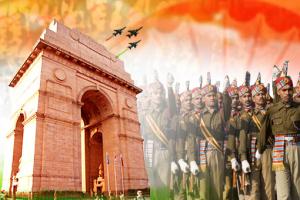
Share creative ideas to highlight India’s achievements on this Republic Day

Start Date :
Jan 07, 2015
Last Date :
Feb 27, 2015
18:30 PM IST (GMT +5.30 Hrs)
26th January is a day etched in the rich and glorious history of India. ...
All Comments
New Comments
Showing 548 Submission(s)
Sachin Kumar
11 years 6 months ago
dimaag ne bhi kam karna band kar diya hai
Like
(0)
Dislike
(0)
Reply
Report Spam
Sachin Kumar
11 years 6 months ago
kuchh samajh hi nahi aa raha
Like
(0)
Dislike
(0)
Reply
Report Spam
Sachin Kumar
11 years 6 months ago
kya karun lagi padi hai
Like
(0)
Dislike
(0)
Reply
Report Spam
Ankit Thakur
11 years 6 months ago
The escalating tensions along
the India-Pakistan border in
Jammu & Kashmir, where
large civilian populations are
now being targeted by
Pakistan in response to the
BSF's new strategy of hitting
back harder than before, and
the recent media controversy
over the Pakistani boat that
went down in flames in the
Arabian Sea after being
confronted by the Coast
Guard, are symptoms of
India's inability to develop a
clear counter-strategy to
Pakistan's ability to inflict
both terror and costs.
If the increased instances of
firing along the LoC and
International Border are likely
to embarrass us when
President Barack Obama is
with us on R-Day (which was
on reason why Pakistan is
ratcheting up the border
heat), the boat episode has
ended up thrilling the
Pakistanis for the simple
reason that we are internally
split into two camps,
politically and as a people.
With the BJP thumping its
chest on the issue, the
Congress is in a mood to
question government claims;
with newspaper reports
raising doubts over whether
the boat actually carried
potential 26/11 type
terrorists or just contraband,
the country is wondering
whether it should applaud or
sulk. Nothing warms the
cockles of our enemies
across the border more than
the realisation that we are
deeply divided even over our
improved surveillance and
interception capabilities.
The lack of a well-thought-
out and coherent strategy to
deal with Pakistan's
provocations along the border
and its ability to keep shoving
terrorists to create mayhem
here is obvious from the
following:
One, we have announced that
we will give it back to Pakistan
if it provokes us. As Defence
Minister Manohar Parrikar said
the other day, he had told the
security forces that "when
something happens, retaliate
with double the force.” While
this is certainly better than
the previous attitude of
pusillanimity and meek
response, retaliation is not a
strategy. Moreover, if
retaliation results is more
provocations and massive
counter-retaliation (as seems
to be the case on the J&K
border right now), there can
be no exit from escalation.
The last thing we can afford
is a strategy that does not
allow us to control the end-
game and mindlessly slip into
war.
Two, after the Pakistani boat
went down in the wee hours
of 1 January, the BJP was
quick to claim that the
government had managed to
prevent what could have
been a 26/11 incursion on
Indian soil. While this kind of
story-telling may go well with
Narendra Modi's tough guy
image, two fundamental
issues were lost sight of: in
any security related issue, it
is the government that must
control the messaging, not
political parties. Once the BJP
claimed success, the
Congress was quick to
question it, and so was the
media. Secondly, the BJP's
TV spokespersons then
compounded the error by
verbally blasting the
Congress and sections of the
media that had questioned its
version of the boat episode
as "anti-national”.
As security and terrorism
expert Ajai Sahni wrote in The
Economic Times today (7
January), "An operation that
could rightly have been
projected as a significant
success and demonstration
of the country's improving
technical intelligence and
response capabilities has,
instead, become a raging
controversy and
embarrassment for the
government, in an
atmosphere of jingoism and
desperation to secure political
mileage and credit far beyond
anything justified by the
facts.”
Even though the chances are
that the Pakistani boat did
carry bad characters and not
just contraband (read here),
by making unverifiable
claims, the BJP's chest-
thumpers ended up
compromising the
government's position.
Moreover, does it matter
whether the intruding boat
carried terrorists or just
drugs? Once intercepted by
the Coast Guard, and the
boat's occupants decided to
set it on fire rather than allow
the former to board, the
matter is over. A fugitive who
kills himself when the police
stop him has no claim on
public sympathy.
The government has
managed to pull of a PR
failure from an operational
success. An effective
counter-terror strategy will
always have to include an
effective communications
strategy with the public. This
is clearly missing. Accusing
detractors of being
unpatriotic is not the solution.
It will, in fact, end up
delegitimising government
actions.
Three, our policy of no talks
with Pakistan till it abandons
terror is of limited use. Home
Minister Rajnath Singh said
yesterday (6 January) that
"Only Pakistan can decide
(whether to have peace
talks)... talks have to be
fruitful. (We) can't have talks
just for the sake of talks.”
This is a terrible strategy. If
Pakistan is going to decide
when and whether to hold
peace talks, and we are going
to append our own conditions
for the talks, it means the
entire initiative is with
Pakistan. No strategy should
leave the initiative entirely
with the enemy. This way we
will just be responding
aimlessly to provocations and
sudden positive overtures
without understanding why
we are going through the
motions.
Unlike what Rajnath Singh, or,
for that matter, what Modi
himself may believe, talks
should never be abandoned.
In fact, the best time to hold
talks is when there is a terror
strike, for, in this case, we
can focus exclusively on the
issue at hand and demand
action from Pakistan. If we
break off talks just when
Pakistan has sent some
jihadis over for suicide
attacks, it means we will
resume talks at a time of
their choosing, when the
atrocity is long forgotten.
Pakistan will claim it was
always for dialogue, and it
was India that kept breaking
them off. They will claim to
be peaceful guys, and seek
to label us as war-mongers. A
world unaware of the
nuances will wonder what is
wrong with us. Optics matter,
and we cannot afford to lose
the world's sympathetic gaze
whenever it chooses to look
at this side of Planet Earth.
This is not to say the
emerging Modi-Ajit Doval
doctrine on how to respond
to Pakistan is wrong-headed.
Far from it. By retaliating
hard, we have at least
established that our
responses cannot be taken
for granted. A key element in
any strategy should be to
leave the enemy with some
doubt on how we will
respond.
But retaliation, as we stated
before, cannot be the whole
of strategy – if there is one.
It faces the risk of escalation
into something no one wants.
India's signal failure in the
past has been its inability to
understand what it is up
against and what it needs to
do beyond being reactive. We
need a comprehensive
strategy against Pakistan
which must include the
following:
#1: A recognition that the
Pakistani army is the Pakistani
state. So any talks –
whenever held - will have to
include them.
#2: Talks must always
continue no matter what the
provocation. At times of
extreme provocation, there
must be more talks so that
the focus of the world is on
the atrocity, and not the
general state of India-
Pakistan relations. Jaw-jaw, as
has been said, is better than
war-war.
#3: A very high intelligence
and counter-terror capability
must be complemented with
strong internal policing
strengths and an effective
communication strategy
when things happen.
#4: Effective diplomacy and
the use of third party
pressure on Pakistan have to
be integral to any strategy to
counter Pakistan: the only
three countries with leverage
in Pakistan are the US, China
and, possibly Saudi Arabia.
Whatever we do, we need to
check how these three
influencers of Pakistani policy
will react and how they will
communicate our concerns
to our enemy and the world.
#5: We need a security
doctrine that is all-
encompassing – and which is
more widely discussed and
debated. Any strategy against
Pakistan or China should have
strong intellectual inputs
from experts with special
knowledge on these
countries and how they will
respond to what we do.
#6: Effective peace can only
be achieved with effective
war-making capabilities,
whether the war is an open
war or a low-intensity one like
what Pakistan is waging
against us.
As Ajai Sahni noted in an
earlier blog: "Nations that fail
to evolve effective war-
fighting capabilities -
conventional or sub-
conventional - are often
found to be the very nations
that have failed in the
fundamental and essential
task of studying history; or
those that have perverted
their study of history with
dissimulation, falsehood or
delusion. This is substantially
the case with India's war
against terrorism, where the
invention of a range of
pseudo-histories (terrorism in
Punjab was defeated by 'the
people' and not by counter-
terrorist action by the forces);
of false sociologies ('root
causes of terrorism'); and of
pseudo-solutions
(development, negotiations,
autonomy, political
accommodation of terrorists)
has blinded the policy
establishment to the
imperatives of counter-
terrorism strategy and tactics
and, indeed, to the lessons of
India's past counter-terrorism
successes.”
The Khalistani terrorism was
ended by KPS Gill's effective
counter-terror strategy, not
candle-light vigilantes. The
Andhra Pradesh Naxal menace
was ended by purposive
strategy, including the use of
a specialised anti-guerilla
force called Greyhounds. It
did not happen by holding
peace talks with the
comrades. Peace talks follow
defeat on the field, and not
the other way round.
Pakistani terrorism also needs
sound strategy. Says Sahni:
"The absence of strategy and
the incoherence of tactics
has long afflicted India, as
the country finds itself
responding continuously and
insufficiently to provocations
by its neighbours…With over
25 years of Pakistan-
sponsored Islamist terrorist
activity on Indian soil, the
country is still to correctly
define the problem that
confronts it, or to craft an
appropriate 'strategic
architecture' and to derive
policies and practices that are
in conformity with such an
overarching design.
Time Modi and Doval moved
up from tactics to real
strategy.
Like
(0)
Dislike
(0)
Reply
Report Spam
suraj kumar
11 years 6 months ago
I want to see such a india where anyone can speak and discuss for some while to everyone.
for skilled india must turned our vision to school where 9 period of theoretical so I suggest to open a workshop In school where everyday according to syllabus expert or may be worker will teach the students about carpentary , mechanical , electrician , electronics etc so poor people who is always Interested to keen the working with elders will support and take full benefits of it.
I want to see the world where experts from varying countries coming in india for taking mass and advance production experience.
Like
(0)
Dislike
(0)
Reply
Report Spam
Hari Prakash Visant
11 years 6 months ago
Remaininng part of last post..In the venture of the cattle-shed/ Gaushala, you engaged few/ selected cattle-owners as caretakers on good salaries and rest of the owners started getinng handsome profit from gaushala/ shed's venture. So it was a win-win venture for all i.e.the city-residents, cattles, their owners, commuters, sanatery workers and the governents. Why don't you share this idea to all civic/ municipal bodies for solutrion of this problem of stray animals, throughout India?
Like
(1)
Dislike
(0)
Reply
Report Spam
SEEMA KHOKHAR
11 years 6 months ago
dkm
Like
(0)
Dislike
(0)
Reply
Report Spam
SUCHITRA RAGHAVACHARI
11 years 6 months ago
Sir, the first would be to keep sufficient rash bins and mobile rest rooms for those visiting the parade to use, strictly no littering. The day signifies the import of our constitution in the democratic process, hence museums & educational institutions should hold exhibitions pertaining to the constitutional frame work, moot parliaments & quiz contests. Lectures & discussions with regard to national independence, personal freedom & civic duties can be held. Re-usable khadi flags can be used.
Like
(0)
Dislike
(0)
Reply
Report Spam
Hari Prakash Visant
11 years 6 months ago
In tthe cities, the stray animals especially cows and dogs are very big problem; the owners of these animals/cattles leave them freely on roads and they wander on roads, obstruct traffic, eat stale food items along with polythenes or other packinngs,they spread dirtyness and disorder on roads. I had heard that, Modiji you took an innovative step to tackle this problem in Gujrat durinng youur CM-ship, built some cattle-shed in the outskirt of city and kept stray animals there contd....
Like
(0)
Dislike
(0)
Reply
Report Spam
DHARMVEER SINGH
11 years 6 months ago
मंगल मिशन , स्वच्छ भारत मिशन, विदेश निति, e governance, डिजिटल India,
Like
(1)
Dislike
(0)
Reply
Report Spam
- View More