Home | MyGov

Accessibility
Accessibility Tools
Color Adjustment
Text Size
Navigation Adjustment
Screen Reader iconScreen Reader

Inviting Suggestions on the Draft Blue Economy Policy

Inviting Suggestions on the Draft Blue Economy Policy
Start Date :
Feb 19, 2021
Last Date :
Feb 27, 2021
23:45 PM IST (GMT +5.30 Hrs)
Submission Closed

With a coastline of nearly 7.5 thousand kilometres, India has a unique maritime position. Nine of its 29 states are coastal, and the nation’s geography includes 1,382 islands. ...

With a coastline of nearly 7.5 thousand kilometres, India has a unique maritime position. Nine of its 29 states are coastal, and the nation’s geography includes 1,382 islands. There are nearly 199 ports, including 12 major ports that handle approximately 1,400 million tons of cargo each year. Moreover, India’s Exclusive Economic Zone of over 2 million square kilometres has a bounty of living and non-living resources with significant recoverable resources such as crude oil and natural gas. Also, the coastal economy sustains over 4 million fisherfolk and coastal communities. With these vast maritime interests, the blue economy occupies a vital potential position in India’s economic growth. It could well be the next multiplier of GDP and well-being, provided sustainability and socio-economic welfare are kept centre-stage. Therefore, India's draft blue economy policy is envisaged as a crucial framework towards unlocking country’s potential for economic growth and welfare.

The MoES prepared the draft blue economy policy framework in line with the Government of India’s Vision of New India by 2030. It highlighted the blue economy as one of the ten core dimensions for national growth. The draft policy framework emphasizes policies across several key sectors to achieve holistic growth of India’s economy. The document recognizes the following seven thematic areas.

1.National accounting framework for the blue economy and ocean governance.
2.Coastal marine spatial planning and tourism.
3.Marine fisheries, aquaculture, and fish processing.
4.Manufacturing, emerging industries, trade, technology, services, and skill development.
5.Logistics, infrastructure and shipping, including trans-shipments.
6.Coastal and deep-sea mining and offshore energy.
7.Security, strategic dimensions, and international engagement.

The Ministry of Earth Sciences (MoES) has rolled out the Draft Blue Economy policy for India by Inviting suggestions and inputs from various stakeholders including industry, NGOs, academia, and citizens. The draft blue economy policy document outlines the vision and strategy that can be adopted by the Government of India to utilize the plethora of oceanic resources available in the country.

Click here to read the Draft Blue Economy Policy.

Reset
Showing 487 Submission(s)
Dr Ratna Srivastava
Dr Ratna Srivastava 5 years 5 months ago
संसाधनों का"इको फ्रेंडली"उपयोग करना है।सामुद्रिक व्यापार का गौरवशाली इतिहास3000ई.पूर्व से भारत का रहा है।लोथल से प्राप्त"ड्राई डॉक"को विश्व की प्रथम ऐसी सुविधा मानी जाती है जिस पर पोतों केआश्रयऔरउनकी मरम्मत की सुविधा थी।आज उसी नक्शे कदम पर में चलकर इकोनॉमी में क्रांतिकारी परिवर्तन ला सकते हैं।13वींशताब्दी तक हिन्द महासागर पर भारतीय उपमहाद्वीप का वर्चस्व था।16वीं शताब्दी तकविभिन्न देशों के साथ व्यापारिक संबंधों केसाथ सांस्कृतिक एवम् परंपरागत लेनदेन का भी इतिहास रहाहै।भारत को दबदबा पुनः कायम करना
Rajeev Singh
Rajeev Singh 5 years 5 months ago
गरीबो की इनकम बढ़ाने के लिए उन्हें मछली पालन की विधा में प्रशिक्षण देकर उन्हें पारंगत करने की व्यवस्था का प्रावधान इस नीति में किया जाए।
Dr Ratna Srivastava
Dr Ratna Srivastava 5 years 5 months ago
भारतीय अर्थ व्यवस्था में समुद्री संसाधनों की भागीदारी बढ़ाने के लक्ष्य से"ब्लू इकोनॉमी ड्राफ्ट"तैयार किया गया है जिसका मुख्य उद्देश्य भारत की जी डी पी में "ब्लू इकोनॉमी"के योगदान को बढ़ावा देना है। देर से ही सही सरकार द्वारा सराहनीय कदम उठाया गया है। जैसा कि हम जानते हैं कि हमारा देश भारतवर्ष तीन ओर से समुद्र से घिरा हुआ है।भारतीय समुद्र तट की लम्बाई 7516.6 किलोमीटर है।हमारे 09राज्यों की सीमा समुद्र तट से लगी हुई है।इतिहास गवाह है कि भारत प्राकृतिक संसाधनों से भरा पड़ा है।हमें अपने संसाधनों ...2
Preeti katara
Preeti katara 5 years 5 months ago
The concept was introduced by Gunter Pauli in his 2010 book- “The Blue Economy: 10 years, 100 innovations, 100 million jobs”. It is the sustainable use of ocean resources for economic growth, improved livelihoods and jobs, and ocean ecosystem health.4
Avijit Sah
Avijit Sah 5 years 5 months ago
To increase export of agro products, at least there should be small government or FSSAI approved laboratories in every district. I want to export a particular product and want to get it tested first in a laboratory but its 200 kms far from me and I don't feel it easy.
Vivek Kumar sahu
Vivek Kumar sahu 5 years 5 months ago
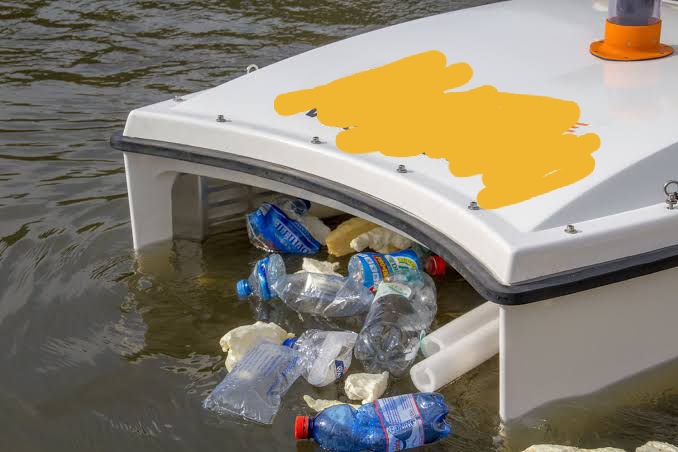
Drones can be used to clean ocean at large scale. Easy, automatic and solar powered DRONES can be left on the sea to work day and night
mygov_161398023780617701
POORVACHAUHAN
POORVACHAUHAN 5 years 5 months ago
INDIA NEEDS TO CHANGE IT'S 'SOFT POLICY' TOWARDS CHINA. MYANMAR HAS GIVEN THE COCO ISLAND GIFTED BY OUR FORMER PM NEHRU TO CHINA. NOW CHINA WILL USE IT AGAINST US.. TAKE OUR ISLAND BACK!!!!!!
ASHWANI KUMAR
ASHWANI KUMAR 5 years 5 months ago
Blue Economy concept seems as a milestone for our great nation. The vision of that should be crystled and government must stalk with their policies to preserve it. The success of our economic also going through our natural resources like oceans. Research and Development programme be hiked.
RAJESH MAHATO
RAJESH MAHATO 5 years 5 months ago
The ‘Blue Economy’ is an emerging concept which encourages better stewardship of our ocean or ‘blue’ resources. Suggests exploring the deployment of a dedicated satellite system for management and regulation of fisheries and allied activities. The proposed policy aims to enhance the contribution of the blue economy to India’s GDP, improve lives of costal communities preserve marine biodiversity, and maintain the national security of marine areas and resources.